

This is exactly where an endoscope transforms the game. These compact inspection cameras snake into the narrowest passages, delivering real-time visuals of components you’d otherwise need to disassemble entire systems to reach. But not all endoscopes perform equally when clarity matters most. The goal of this guide is straightforward: help you find the best endoscope that delivers crystal-clear imaging and reliable video recording in the confined spaces where automotive problems love to hide. Whether you’re inspecting valve seats, checking for corrosion inside pipes, or documenting damage for a customer, the right tool makes all the difference.
An endoscope is a flexible inspection instrument equipped with a miniature camera and LED lights at the tip of a slender, maneuverable probe. Originally developed for medical procedures, endoscope technology has evolved dramatically for industrial and automotive applications, with modern units from manufacturers like Teslong featuring high-resolution sensors, articulating tips, and wireless connectivity that would have seemed impossible a decade ago.
Mechanics rely on endoscopes because they eliminate the need to disassemble components just to get a visual on a suspected problem. Instead of pulling an intake manifold to check for carbon buildup on valves, or dropping a transmission pan on a hunch, you insert the probe through an accessible opening and see exactly what’s happening inside. This non-invasive approach saves hours of labor on diagnostics alone—time that translates directly into profitability for shops and reduced downtime for fleet operations.
Beyond time savings, the best endoscope pays for itself by preventing unnecessary part replacements. When you can visually confirm whether a cylinder wall is scored or a gasket is actually leaking, you quote repairs with confidence rather than speculation. For mechanics who need a reliable inspection tool that works in dark, cramped, and often oil-soaked environments, an automotive endoscope has become as essential as a scan tool or multimeter in the modern diagnostic toolkit.
Key Features of the Best Endoscope for Tight Spaces
When selecting an endoscope for automotive work, three factors separate professional-grade tools from toys: camera quality that reveals actual detail, flexibility that navigates complex passages, and durability that withstands harsh shop conditions. The best endoscope combines all three without compromising on any single aspect, giving mechanics a tool they can trust in every inspection scenario.
Dual Lens Camera: Enhancing Versatility in Automotive Inspection
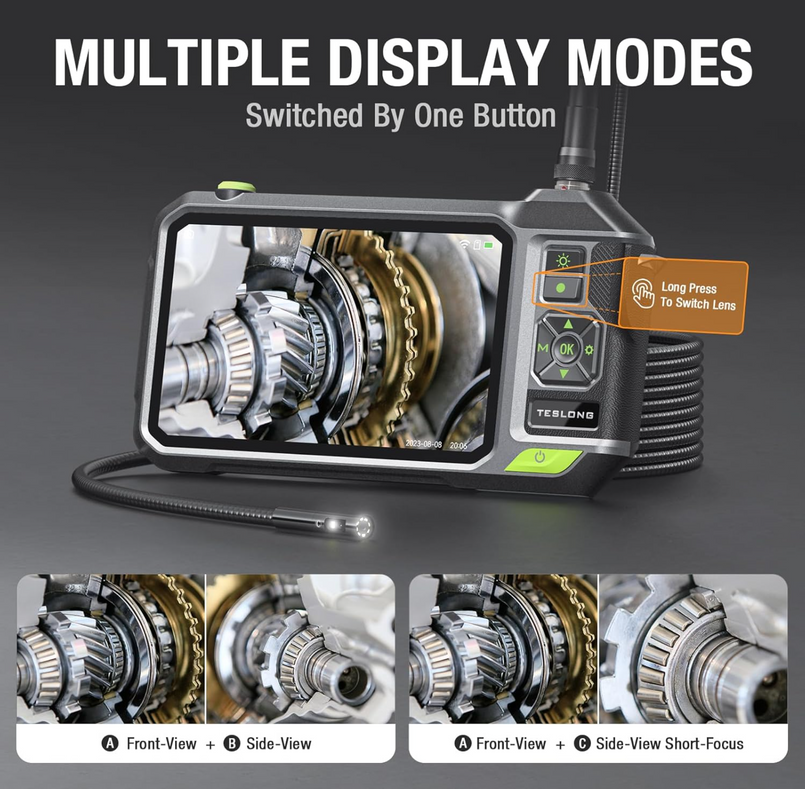
A dual lens camera system gives you both a forward-facing and a side-viewing perspective without repositioning the probe. This matters enormously when you’re threading through a cylinder bore and need to inspect the walls laterally while also checking the piston crown ahead. The best endoscope with dual lens capability lets you switch views instantly, reducing the number of insertions required and improving diagnostic accuracy when working around bends, T-junctions in coolant passages, or inside cramped valve covers where repositioning the probe risks damaging components.
HD Inspection Camera: Ensuring Clear Imaging for Diagnostics
Resolution determines whether you’re actually diagnosing or just guessing at shapes in the dark. An HD inspection camera captures fine details—hairline cracks in exhaust manifolds, early pitting on bearing surfaces, or the subtle discoloration that signals overheating. In confined automotive spaces where you can’t get closer for a better look, high-definition imaging compensates by rendering sharp, detailed frames that you can zoom into after capture. Clear imaging turns ambiguous shadows into definitive answers.
Durability and Design: Tools Built for Automotive Environments
Automotive environments punish delicate equipment. Oil, coolant, brake fluid, and metal shavings are constant threats to any inspection tool. Look for IP67 or higher waterproof ratings, semi-rigid probes that hold their shape through tight bends yet resist kinking, and reinforced cable junctions that won’t fail after repeated use. An adjustable-length probe with a protective housing means the tool survives being tossed in a toolbox drawer between jobs—because in a busy shop, that’s exactly what happens.
Step-by-Step Guide to Using an Automotive Inspection Camera
Getting the most from your endoscope starts before you ever insert the probe. First, power on the unit and verify the camera lens is clean—a single smear of oil on the lens renders even the best HD inspection camera useless. Adjust the LED brightness to a medium setting initially; you can increase intensity once you’re inside the inspection area and can gauge how reflective the surrounding surfaces are. If your unit features a dual lens camera, select the forward-facing view for initial insertion and switch to the side view once you’ve reached the target area.
When inserting the probe, guide it slowly and deliberately. Forcing the cable around tight bends causes image blur from vibration and risks damaging both the probe and the components you’re inspecting. Use the semi-rigid nature of the cable to your advantage—pre-shape a gentle curve before feeding it into curved passages like intake runners or coolant channels. Once you’ve reached the inspection zone, lock the probe position if your model allows it, then rotate slowly to survey the full circumference of the space.
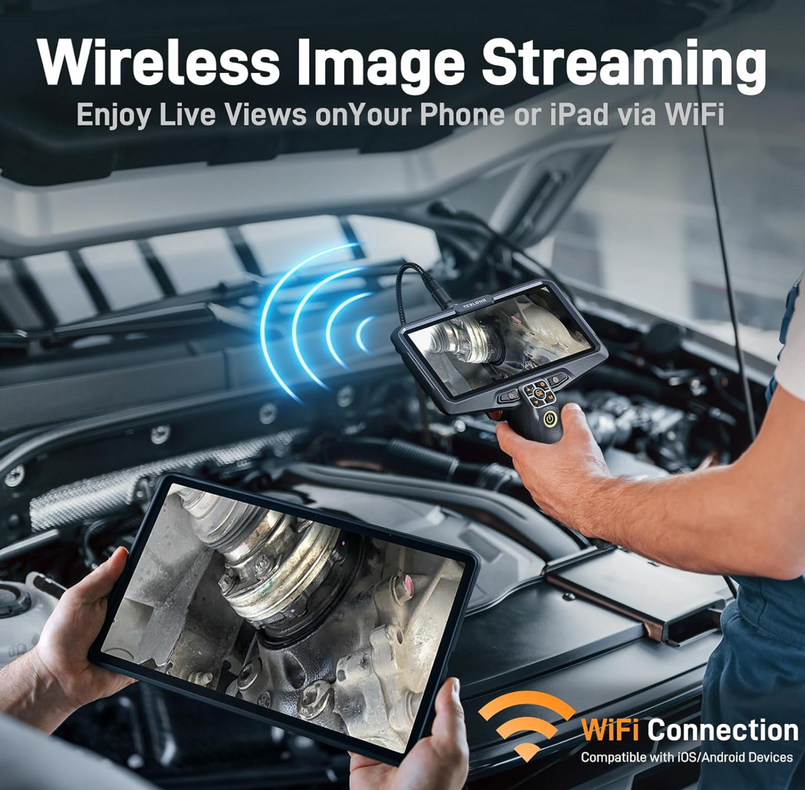
For capturing diagnostics, activate the video recording function before you begin your sweep rather than trying to snap individual photos of problems you spot in real time. Continuous recording ensures you never miss a fleeting glimpse of a crack or deposit. After the inspection, transfer files via Wi-Fi or USB to your shop computer or tablet. Most professional units save footage in standard formats compatible with diagnostic report software, making it simple to annotate findings, attach clips to work orders, or show customers exactly why a repair is necessary. Label each recording with the vehicle identification and inspection location immediately—a habit that prevents confusion when reviewing footage days later.
Choosing the Best HD Inspection Camera: A Buyer’s Guide
Selecting the best endoscope for your shop requires weighing several factors against the types of inspections you perform most frequently. Resolution should be your starting point—look for true HD capability at 1080p or higher, as lower-resolution units may advertise “HD” while delivering interpolated images that fall apart when you zoom in on a suspect area. The sensor quality matters as much as pixel count; a well-engineered sensor with good low-light performance outperforms a higher-resolution chip that produces noisy, grainy footage in dark cavities.
Lens configuration is your next consideration. A dual lens camera system adds significant versatility for mechanics who inspect varied geometries daily, from straight cylinder bores to winding coolant passages. If your work focuses primarily on straightforward visual checks, a single forward-facing lens may suffice, but most professionals find the side-view capability invaluable once they’ve experienced it. Connectivity options also shape your workflow—Wi-Fi models stream directly to tablets or phones for easy screen sharing with customers, while USB-connected units often deliver more stable video with zero latency, which matters during precise inspections where real-time feedback guides your probe movements.
Consider probe diameter relative to your most common access points. Thinner probes reach tighter spaces but typically house smaller sensors with reduced image quality. Match the probe length to your deepest inspection needs without excess cable that becomes unwieldy. Finally, evaluate the ecosystem around the tool: does the manufacturer offer replacement cables, compatible software for report generation, and firmware updates that improve functionality over time? Brands like Teslong have built out ecosystems with interchangeable probes and dedicated apps, recognizing that the best HD inspection camera isn’t just a one-time purchase—it’s a platform that grows with your diagnostic capabilities and continues delivering clear imaging across thousands of inspections.
Practical Solutions: Integrating Endoscopes into Your Diagnostic Workflow
In practice, endoscopes prove their worth across a wide range of daily shop scenarios. One technician tracing an intermittent coolant leak on a turbocharged engine used a dual lens camera to navigate behind the turbo housing without removing it—spotting a cracked coolant hard-line that would have required three hours of disassembly to find visually. Brake inspections benefit similarly; feeding a probe through the caliper bracket opening reveals pad wear, rotor scoring, and dust boot condition without pulling wheels on every vehicle during a multi-point inspection. Engine carbon buildup assessments through spark plug holes have become routine at shops equipped with HD inspection cameras, allowing advisors to show customers exactly why walnut blasting or chemical cleaning is recommended.
To keep your endoscope performing reliably, wipe the probe and lens with isopropyl alcohol after each use, coil the cable loosely to prevent kinking, and store it in a protective case away from heavy tools. Check LED function and lens clarity weekly as part of your equipment maintenance routine. The recording capability transforms team communication—senior technicians can review a junior tech’s inspection footage remotely, and service advisors can embed video clips directly into digital vehicle inspection reports. Customers who see actual footage of a corroded brake line or a worn timing chain guide approve repairs faster and with greater trust, turning your endoscope into both a diagnostic instrument and a powerful communication tool that strengthens client relationships.
Invest in Clear Imaging for Faster, More Accurate Automotive Diagnostics
Finding the best endoscope for automotive work comes down to matching the tool’s capabilities to the challenges you face daily in tight, poorly lit spaces. A dual lens camera system delivers the viewing flexibility needed to inspect complex geometries without multiple probe insertions, while true HD imaging ensures that hairline cracks, early corrosion, and subtle wear patterns show up with the clarity required for confident diagnoses. Durability features like waterproofing and semi-rigid construction keep the tool performing reliably in the harsh conditions that define shop life.
The right endoscope directly addresses the core frustration every mechanic knows—being unable to see what’s causing a problem without tearing half a system apart. With clear visuals and integrated video recording, you move from guessing to knowing, from unnecessary disassembly to targeted repairs. Diagnostic accuracy improves, labor time drops, and customer trust grows when you can show rather than just tell. Investing in a quality inspection camera isn’t just about buying another tool; it’s about fundamentally improving how you approach every hidden problem that rolls into your bay, making your work faster, more precise, and more profitable with every inspection.


