

Yet walking into a kitchenware store or browsing online reveals an overwhelming array of options at wildly different price points. How do you distinguish a pan that will perform beautifully for decades from one that warps after a few months? The challenge is real—marketing jargon, confusing specifications, and flashy packaging make it difficult for even experienced home cooks to separate genuine quality from clever branding. This guide breaks down exactly what to look for in a stainless steel sauté pan, from material composition and construction methods to practical purchasing considerations like delivery speed and return policies, so you can invest with confidence.
Understanding what lies beneath the polished surface of a stainless steel sauté pan is essential before spending your money. Three core components determine whether a pan will deliver consistent results year after year: the grade of steel used, the construction method that bonds multiple layers together, and the handle that connects you to the cooking process. Each element plays a distinct role—the steel provides durability and food safety, the layered construction ensures heat moves evenly across the cooking surface, and the handle must balance comfort with structural integrity. When these components work in harmony, you get a pan that heats predictably, responds to temperature adjustments quickly, and withstands the rigors of daily use without warping, discoloring, or loosening at the joints.
Material and Grade of Stainless Steel
Not all stainless steel is created equal. The numbers you see stamped on cookware—like 18/10 or 18/8—refer to the chromium and nickel content respectively. An 18/10 grade (also known as 304 stainless steel) contains 18% chromium for corrosion resistance and 10% nickel for added durability and a smooth, lustrous finish. This is the gold standard for cooking surfaces because it resists pitting, doesn’t react with acidic foods like tomatoes or wine, and maintains its appearance over time. Lower grades, such as 430 stainless steel (which contains chromium but no nickel), are sometimes used for outer layers or budget cookware. While functional, they’re more susceptible to corrosion and staining. When evaluating any pan, look for explicit mention of 304 or 18/10 steel on the cooking surface—if a manufacturer doesn’t disclose this information, consider it a red flag.
Construction and Layering
Stainless steel alone is a poor heat conductor, which is why quality stainless steel sautē pans use cladding—a process that bonds layers of different metals together. Tri-ply construction sandwiches an aluminum core between two layers of stainless steel, creating a pan that heats evenly while maintaining a non-reactive cooking surface. Five-ply designs add additional layers for even greater heat distribution and structural rigidity, though they come with added weight. To identify well-constructed pans, follow these steps: first, examine the pan’s edge—fully clad pans show visible layers along the rim, while pans with only a disc of aluminum welded to the bottom will have a single-material sidewall. Second, hold the pan and assess its weight; a quality tri-ply pan feels substantial but not unwieldy. Third, place your hand flat across the bottom—it should be perfectly level with no wobble, indicating proper manufacturing tolerances. Copper-core variants offer superior thermal responsiveness but at a higher cost, making aluminum-core cladding the best balance of performance and value for most home cooks.
Handle Design and Comfort
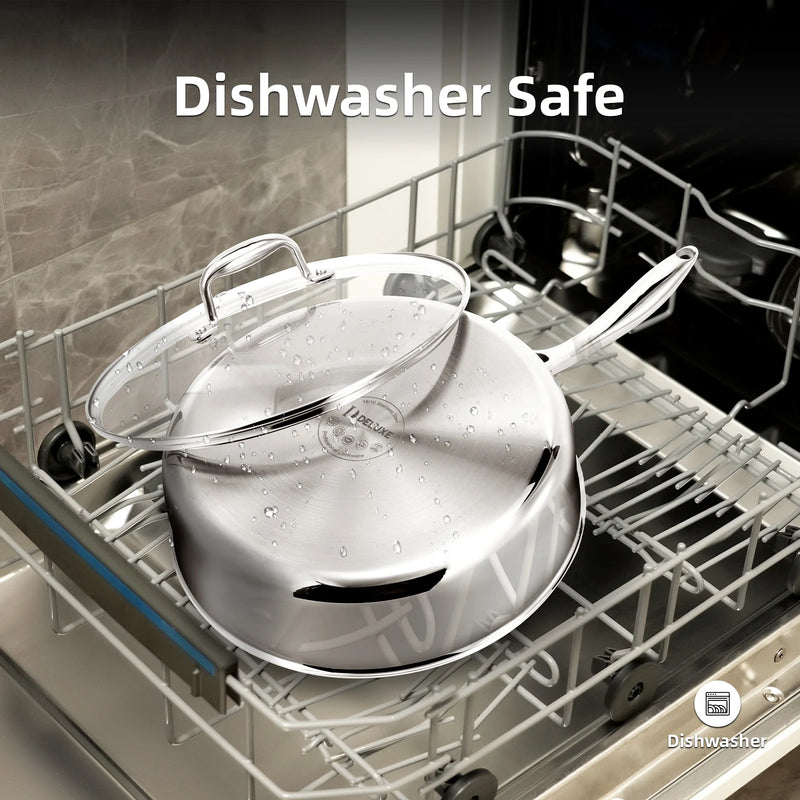
A handle might seem like an afterthought, but it fundamentally affects how safely and comfortably you cook. The best sauté pan handles are made from cast stainless steel with a slightly curved, ergonomic shape that distributes weight naturally in your grip. Riveted attachment—where metal fasteners physically pin the handle to the pan body—remains the most durable method, far outlasting spot-welded alternatives that can loosen over time. Some manufacturers offer silicone-coated handles for heat resistance, though bare stainless steel handles have the advantage of being oven-safe at any temperature. To test handle quality before purchasing, consider these factors: the pan should balance comfortably when held at arm’s length without tipping forward, the handle should stay cool enough to grip briefly on medium stovetop heat, and there should be no sharp edges or seams where your fingers wrap around. A helper handle on the opposite side is invaluable for heavier pans, making it safer to transfer food from stovetop to oven or to pour sauces with control.
Essential Features to Consider When Buying
Beyond the fundamental construction of a sauté pan, several practical features determine how well it integrates into your daily cooking routine. The right combination of size, lid design, and thermal performance can mean the difference between a pan you reach for every evening and one that collects dust in the back of a cabinet. These considerations become especially important when you’re investing in premium cookware, where every design choice should serve a functional purpose rather than merely adding to the price tag.
Size and Capacity
Choosing the right size sauté pan depends entirely on how you cook and how many people you typically feed. A 3-quart pan suits couples or individuals who prepare single-batch meals, while a 5-quart version handles family dinners and batch cooking with ease. To determine your ideal size, start by considering your largest burner—the pan’s base should match or sit slightly within the burner diameter for optimal heat contact. Next, think about your most common dishes: searing four chicken thighs requires at least a 12-inch diameter to avoid overcrowding, which traps steam and prevents proper browning. Finally, lift the pan you’re considering with one hand; if it feels unmanageable empty, it will be worse loaded with food. Stovetop compatibility matters too—induction cooktops require a magnetic base, so verify this specification before purchasing if your kitchen uses induction technology.
Lid Compatibility
A well-fitting lid transforms a sauté pan from a single-purpose searing tool into a braising, steaming, and simmering vessel. Stainless steel lids retain heat efficiently and withstand high oven temperatures, making them ideal for recipes that transition from stovetop to oven. Glass lids let you monitor cooking progress without releasing moisture, which is particularly useful for reductions and delicate sauces. To ensure a proper fit, check that the lid sits flush against the rim with minimal wobble—gaps allow steam to escape and disrupt precise temperature control. Look for lids with steam vents if you frequently simmer, as these prevent pressure buildup and boil-overs. Some cookware sets include interchangeable lids designed to fit multiple pieces, which saves storage space and adds versatility to your collection.
Heat Distribution and Retention
Even heat distribution eliminates hot spots that scorch garlic in one area while leaving onions raw inches away. The thickness of the pan’s base and walls directly impacts this—thicker construction stores more thermal energy and releases it gradually, which is critical for maintaining consistent searing temperatures when cold food hits the surface. To test heat evenness at home, sprinkle a thin layer of flour across the dry pan and heat it on medium; the flour should brown uniformly rather than in a ring pattern. Pans with aluminum cores extending up the sidewalls (fully clad) outperform those with only a bottom disc, because sidewall heat matters when tossing vegetables or reducing liquids. Heat retention also affects deglazing—a pan that holds its temperature recovers quickly after you add wine or stock, keeping the fond dissolution active rather than stalling the cooking process.
Shopping Smart: Addressing Shopper Needs
Finding the right stainless steel sauté pan involves more than evaluating construction and features—it also means navigating the purchasing process itself. Where you buy, how quickly it arrives, and what happens if the pan doesn’t meet your expectations all factor into the overall value of your investment. Smart shoppers treat these logistical considerations with the same seriousness as material quality, because even the finest pan loses its appeal if it arrives damaged, takes weeks to ship, or can’t be returned when it doesn’t perform as advertised. Understanding how to evaluate retailers and their policies puts you in control of the entire buying experience.
Identifying Reputable Brands and Retailers
The marketplace is crowded with cookware brands making bold claims, so establishing trust before purchasing saves both money and frustration. Start by examining customer reviews across multiple platforms—not just the retailer’s own site—looking for consistent feedback about durability after six months or more of use rather than initial impressions alone. Reputable brands like Deluxe Cookware typically back their products with meaningful warranties, often covering manufacturing defects for years rather than months. Check whether the brand holds relevant certifications or complies with food-safety standards, and look for transparency about where and how their products are manufactured. A company that publishes detailed specifications about steel grade, cladding method, and heat tolerance demonstrates confidence in their product. Finally, evaluate the retailer’s customer service responsiveness—send a pre-purchase question via email or chat and note how quickly and thoroughly they respond, as this predicts the support you’ll receive if issues arise after delivery.
Leveraging Fast Delivery and Free Shipping
When you’ve decided on a pan, waiting weeks for delivery dampens the excitement and delays your cooking plans. Many premium cookware retailers now offer fast delivery options that get products to your door within days rather than weeks. To take advantage of these services, first verify the shipping speed displayed on the product page—look for specific timeframes like “ships within 24 hours” or “2-3 business day delivery” rather than vague promises. Second, check whether free shipping applies to your order; many retailers waive shipping fees above a certain purchase threshold or offer it as a standard benefit. Third, confirm your shipping address is within the delivery zone for expedited options, as rural areas sometimes face longer transit times regardless of the service level selected. Signing up for retailer newsletters often unlocks promotional shipping offers, and purchasing during seasonal sales events frequently bundles fast delivery with free shipping as an added incentive.
Utilizing 30-Day Returns for Risk-Free Purchases
No amount of online research fully replicates the experience of cooking with a pan in your own kitchen, on your own stovetop, with your own recipes. This is precisely why 30-day returns policies exist—they give you a meaningful trial period to evaluate performance under real conditions. Before purchasing, read the return terms carefully: confirm whether the policy covers used items or only unopened packaging, whether return shipping is prepaid or at your expense, and whether you’ll receive a full refund or store credit. To protect your eligibility, keep all original packaging and documentation until you’re certain the pan meets your standards. Test the pan methodically during your trial window—sear proteins to check for hot spots, deglaze to assess heat recovery, and wash it repeatedly to evaluate how well the finish holds up. If the pan doesn’t perform to your expectations, initiate the return promptly rather than waiting until the deadline approaches. Retailers offering 30-day returns signal genuine confidence in their products, and this policy effectively eliminates the financial risk of trying premium cookware for the first time.
Making the Final Decision: A Comprehensive Buyer’s Checklist
With all the information gathered, distilling your research into a clear decision framework prevents analysis paralysis and ensures you don’t overlook critical factors. Before clicking “add to cart,” run through these essential checkpoints systematically. On the quality front, confirm the pan uses 18/10 (304) stainless steel on the cooking surface, features fully clad tri-ply or five-ply construction with visible layers at the rim, and has securely riveted handles that feel balanced in your grip. For practical features, verify that the size matches your burner diameter and typical batch volume, that a compatible lid is included or available, and that the pan’s weight feels manageable when you imagine it loaded with food. On the purchasing side, confirm the retailer offers fast delivery with a specific timeframe rather than open-ended estimates, check whether free shipping applies to your order or if you need to meet a minimum threshold, and verify that a 30-day returns policy covers used cookware with prepaid return labels. Cross-reference customer reviews for real-world durability feedback, and don’t hesitate to contact customer service with any remaining questions before committing. This checklist approach transforms a complex decision into a series of simple yes-or-no confirmations, giving you the clarity to invest confidently in cookware that will serve you for years to come.
Invest in Cookware That Elevates Every Meal
Choosing a quality stainless steel sauté pan ultimately comes down to three pillars: material integrity, thoughtful construction, and features that match your cooking habits. An 18/10 stainless steel cooking surface ensures food safety and longevity, while fully clad multi-ply construction delivers the even heat distribution that separates professional-grade results from frustrating hot spots. The right size, a well-fitting lid, and a comfortable riveted handle turn a good pan into one you’ll reach for daily without hesitation.
Equally important is how you navigate the purchase itself. Prioritizing retailers that offer fast delivery keeps your momentum going once you’ve made a decision, while free shipping preserves your budget for the quality level you deserve. A 30-day returns policy removes the guesswork entirely, letting you evaluate performance in your own kitchen with zero financial risk. Together, these purchasing safeguards complement the product research you’ve already done. Use this guide as your roadmap, trust the checklist to keep you focused, and invest in cookware that rewards you with better meals and greater confidence every time you turn on the stove. Quality stainless steel isn’t just a purchase—it’s a long-term partnership with your kitchen.


