Fluorescent lighting operates through a multi-step energy conversion process. When electricity flows through the tube, it excites mercury vapor sealed inside the glass envelope. This excited mercury produces ultraviolet radiation—invisible to the human eye—which then strikes a phosphor coating on the tube’s interior surface. The phosphor absorbs that UV energy and re-emits it as visible white light. This indirect conversion method means fluorescent tubes require a ballast to regulate current flow, and they need a brief warm-up period before reaching full brightness.
LED technology works on an entirely different principle. Light is generated directly when electrical current passes through a semiconductor diode, a process called electroluminescence. There’s no intermediate UV stage, no mercury, and no ballast required. The semiconductor emits photons immediately upon receiving power, which means LEDs reach full output the instant they’re switched on.
These fundamental differences in how each technology produces light create several practical distinctions worth noting. Fluorescent tubes emit light in all directions—a full 360-degree spread—meaning a significant portion of their output hits the inside of the fixture housing and is either absorbed or reflected, reducing effective delivery to the workspace below. LEDs, by contrast, are inherently directional, casting light in a specific hemisphere without relying on reflectors to redirect wasted output. Fluorescents also generate more heat relative to their light output and contain fragile glass tubes susceptible to breakage. LEDs use solid-state components with no filaments or pressurized gases, making them physically more resilient from the outset. These core engineering differences set the stage for how each technology performs across efficiency, durability, and light quality.
Efficiency & Operational Costs: The Long-Term Financial Picture
The financial case for any lighting system extends well beyond the purchase price on the box. When you examine energy consumption at the most fundamental level, LED shop lights deliver between 100 and 150 lumens per watt, while standard fluorescent tubes typically produce 50 to 100 lumens per watt. In practical terms, an LED fixture can produce the same amount of usable light as a fluorescent while drawing 40 to 60 percent less electricity. For a shop running 50 fixtures at 12 hours per day, that efficiency gap translates into thousands of dollars in annual utility savings.
Maintenance costs compound the disparity further. Fluorescent tubes degrade noticeably after 10,000 to 20,000 hours, and ballasts—the weakest link in the system—fail unpredictably, often requiring an electrician for replacement. In spaces with high ceilings or hard-to-reach fixtures, the labor cost of each lamp change can exceed the cost of the tube itself. LEDs eliminate ballast failures entirely and maintain consistent output for 50,000 hours or more, dramatically reducing the frequency of service calls and the associated disruption to operations.
 When you calculate total cost of ownership over a seven-to-ten-year window, LED installations routinely cost 50 to 70 percent less than maintaining an equivalent fluorescent shop light system. Many utility companies accelerate this advantage by offering rebates or incentives for LED retrofits, effectively subsidizing the upfront investment. For most commercial spaces operating lights more than eight hours daily, the payback period on an LED retrofit falls between 12 and 24 months—after which every month of operation delivers pure savings directly to the bottom line. The longer your operating hours and the higher your local electricity rates, the faster that return materializes.
Illumination Quality: Creating a Bright Workspace for Your Needs
Light quality goes far beyond raw brightness—it determines whether workers can distinguish fine details, whether colors appear true to life, and whether people feel alert or fatigued after hours under artificial illumination. The Color Rendering Index (CRI) measures how accurately a light source reveals the true colors of objects compared to natural sunlight. Standard fluorescent tubes typically score between 62 and 80 on the CRI scale, which is adequate for general tasks but can make colors appear washed out or slightly shifted. High-quality LED shop lights routinely achieve CRI values of 80 to 95, meaning paint colors, wire markings, product finishes, and safety labels appear more vivid and distinguishable. In environments where visual accuracy matters—automotive paint booths, quality inspection stations, retail displays—that difference directly reduces errors and improves safety.
Color temperature flexibility is another area where LEDs pull ahead. Fluorescent tubes lock you into a fixed color temperature at purchase, typically ranging from a warm 3000K to a cool 5000K. LEDs offer the same range but also include tunable-white options that let you shift the tone throughout the day—cooler temperatures around 5000K promote concentration and alertness during production hours, while warmer tones create inviting atmospheres in customer-facing areas. Beyond color, fluorescent tubes are prone to visible flicker, especially as ballasts age, which contributes to headaches, eye strain, and reduced concentration over extended shifts. LEDs driven by quality constant-current drivers produce flicker-free output that remains stable throughout their lifespan. Combined with their directional nature—placing light precisely on work surfaces rather than scattering it across ceilings and walls—LEDs reduce glare and deliver more uniform illumination where it actually matters, keeping eyes comfortable and minds focused throughout the workday.
Durability & Performance: Built for Demanding Industrial Lighting
Commercial and industrial spaces demand lighting that performs reliably under conditions that would quickly destroy consumer-grade products. Fluorescent tubes are inherently fragile—thin glass envelopes filled with pressurized gas and coated with delicate phosphor layers. A dropped fixture, a stray piece of equipment, or even sustained vibration from nearby machinery can shatter a tube, releasing mercury vapor and creating both a safety hazard and an operational interruption. LEDs use solid-state semiconductor construction with no glass envelopes, no filaments, and no toxic gases. They withstand impacts, vibration, and rough handling that would immediately end a fluorescent tube’s service life.
Temperature extremes expose another critical weakness in fluorescent technology. In cold environments—walk-in coolers, unheated warehouses, loading docks during winter—fluorescent tubes struggle to start and often produce significantly reduced light output until they warm up. Below 50°F, many fluorescent installations deliver noticeably dim, flickering illumination precisely when visibility matters most. LEDs actually perform better in cold conditions, reaching full brightness instantly regardless of ambient temperature, making them the clear choice for refrigerated storage, outdoor canopies, and seasonal facilities.
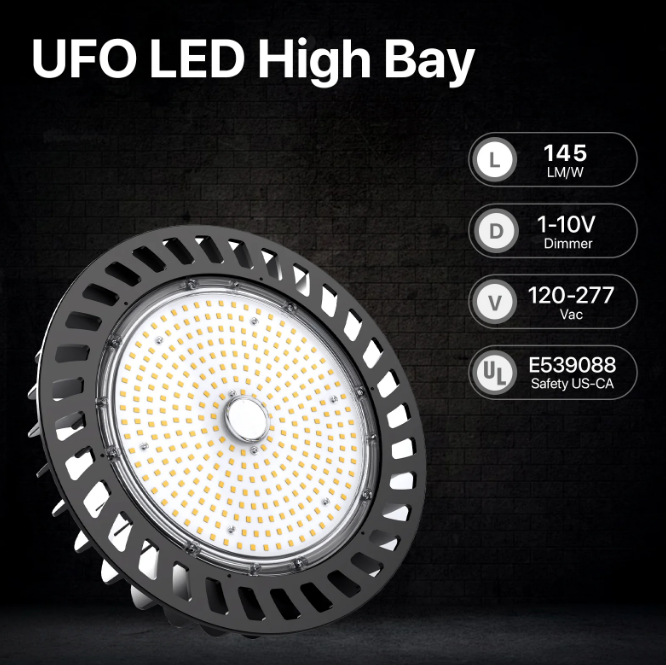
Lifespan differences become especially pronounced in spaces that operate around the clock or cycle lights frequently. Every on-off cycle degrades a fluorescent tube’s electrodes, shortening its effective life well below the rated 10,000 to 20,000 hours. LEDs are unaffected by frequent switching and routinely deliver 50,000 to 75,000 hours of consistent output—provided heat is managed through proper fixture design. For dusty machine shops, humid wash bays, or outdoor applications, LED fixtures are available with IP65 and IP66 ingress protection ratings, sealing internal components against moisture and particulate infiltration. Manufacturers like Hyperlite offer high-bay and shop light fixtures specifically engineered with these protection ratings, combining robust thermal management with impact-resistant housings suited to the harshest industrial environments. This combination of physical toughness, thermal resilience, and environmental sealing makes LEDs the definitive choice for any space where downtime and replacement logistics carry real operational consequences.
Brand Image & Modern Workspace Aesthetics
The lighting in your space communicates something about your business before a single word is exchanged. When a client walks into a shop illuminated by aging fluorescent tubes—some flickering slightly, others casting that familiar greenish-yellow tint—the subconscious message is one of outdated operations and deferred maintenance. It doesn’t matter how skilled your team is or how advanced your equipment may be; poor lighting undermines credibility at first glance. Clean, uniform LED illumination signals professionalism, attention to detail, and investment in quality. It tells customers and partners that this is a business that operates at a modern standard.
Beyond perception, LED technology offers design possibilities that fluorescents simply cannot match. Slim-profile fixtures integrate seamlessly into contemporary ceiling layouts without the bulky housings that traditional tubes require. Tunable-white systems allow you to set cooler, energizing tones in production areas while shifting to warmer hues in showrooms or reception zones—all from the same fixture platform. Integration with smart controls enables automated dimming, occupancy-based scheduling, and daylight harvesting, giving your space an intelligent responsiveness that impresses visitors and reduces waste simultaneously. For employees, working under stable, high-quality light with no perceptible flicker elevates morale and reinforces the sense that their employer values their comfort. In competitive hiring markets, workspace environment matters more than many owners realize—and lighting is one of the most visible, immediately felt elements of that environment.
Your Decision Guide: Choosing the Best Professional-Grade Lights
Step 1: Assess Your Current Setup & Primary Needs
Start by walking your space with a critical eye. Count every fixture, note the tube type and wattage currently installed, and document which areas receive complaints—dim corners, flickering zones, or sections where color looks off. Record your daily operating hours honestly, including weekends and overtime periods. Then categorize your tasks by visual demand: detailed assembly and inspection work requires different lighting than general storage aisles or vehicle bays. This inventory becomes your baseline for calculating both current energy spend and the performance gaps any upgrade must address.
Step 2: Define Your Budget Parameters
Separate your thinking into two distinct financial buckets. The first is your upfront capital budget—what you can allocate today for fixtures, installation labor, and any electrical modifications. The second is your operational budget over the next five to ten years, encompassing electricity, lamp replacements, and maintenance labor. Many business owners who balk at LED’s higher initial cost fail to account for the cumulative drain of fluorescent maintenance and energy waste. Explore utility rebate programs in your area, manufacturer financing plans, and commercial PACE (Property Assessed Clean Energy) programs that allow you to fund upgrades through property tax assessments with no upfront outlay.
Step 3: Match Technology to Your Workspace Type
For high-bay warehouses, auto repair shops, cold storage facilities, and retail showrooms, LED is the unambiguous recommendation—its instant-on performance, directional output, and durability align perfectly with these demanding environments. If you operate a low-ceiling office or storage area with limited daily hours and already have relatively new T5HO fluorescent fixtures with electronic ballasts, those installations may serve adequately as an interim solution until natural end-of-life triggers replacement. However, for any new construction or major renovation, specifying fluorescent in today’s market makes little strategic sense given declining manufacturer support and tightening energy codes.
Step 4: Prioritize Features Based on Needs
Run through these critical questions to weight your selection criteria. Does your work involve color-critical tasks like painting, printing, or quality inspection? Prioritize CRI above 90. Do you need automated scheduling, daylight harvesting, or zone dimming to maximize savings? Specify fixtures compatible with smart control platforms. Is your environment subject to heavy vibration, moisture, dust, or temperature extremes? Require IP65-rated or higher fixtures with impact-resistant lenses. Will your space benefit from tunable color temperature to serve different functions throughout the day? Each affirmative answer points more decisively toward LED and helps you select the exact fixture specifications that deliver measurable returns for your operation.
Why LED Shop Lights Are the Smart Investment for Modern Workspaces
Across every meaningful performance metric, LED shop lights establish clear superiority over fluorescent technology for modern commercial environments. They consume significantly less energy while delivering more usable light to work surfaces. They last three to five times longer with virtually no maintenance burden. They shrug off cold temperatures, vibration, and frequent switching that steadily degrade fluorescent performance. And they render colors with an accuracy that reduces errors, improves safety, and elevates the visual impression of your entire operation. Fluorescent lighting still functions—and for businesses with recently installed T5HO systems running limited hours, those fixtures may reasonably serve until end-of-life. But as a forward-looking investment, LED technology delivers compounding returns that fluorescent simply cannot match.
The best lighting choice is ultimately the one calibrated to your specific space, tasks, operating schedule, and growth plans. Use the decision framework above to move from general knowledge to a concrete action plan tailored to your facility. Assess what you have, define what you need, and match the technology accordingly. The lighting industry continues advancing—with connected controls, human-centric tuning, and ever-improving efficiency on the horizon—making today’s LED investment not just a smart upgrade, but a foundation that positions your workspace to adapt as standards evolve.